Identify the chart
Check whether the seller provides body or garment measurements. Record units and measurement points. Commercial size alone is insufficient; charts may use different methods.
Compare a worn piece
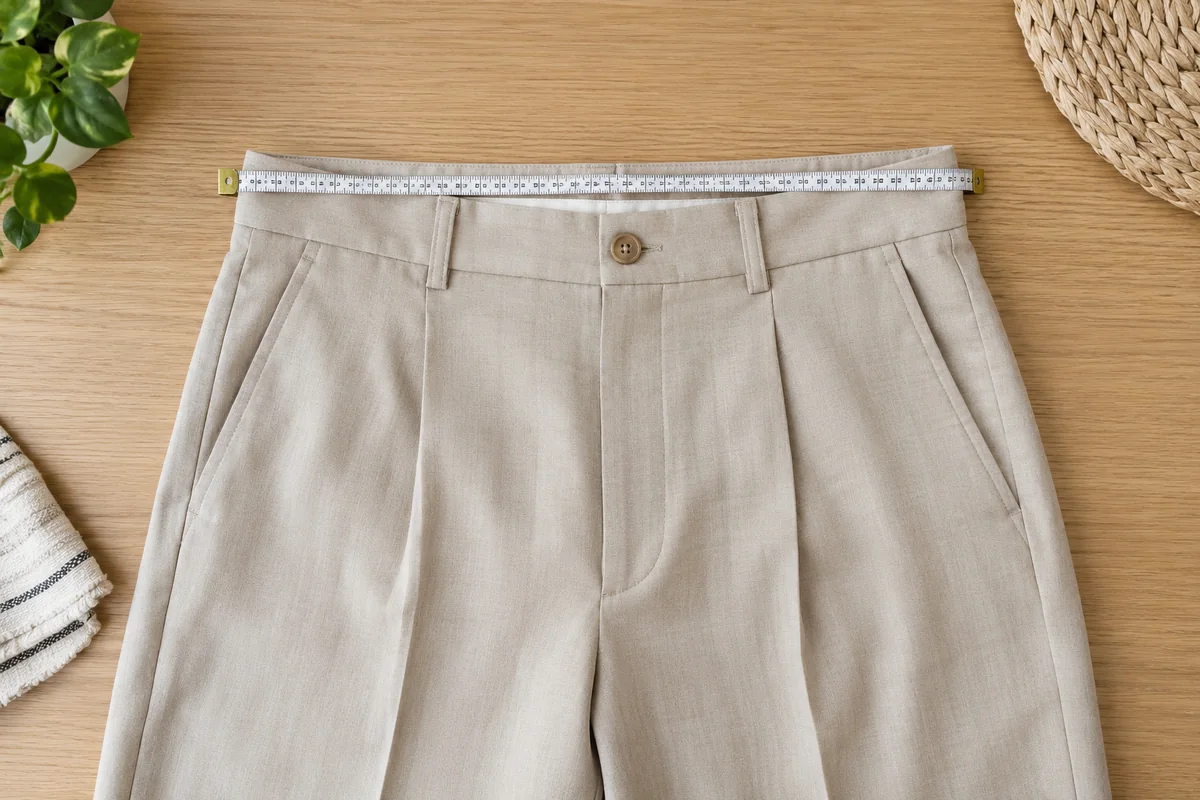
Choose a similar comfortable garment. Measure flat without pulling at the requested points. For trousers distinguish waist, hip, length and inseam; top width and length do not describe sleeve fit.
Ask for missing information
Request stretch, lining and cut details that affect ease. Read returns before buying. Use measurements as comparison aids, without treating them as a comfort guarantee or a judgment of your body.
Compare without false precision
Record dimensions with method and date in one table. Keep uncertainty visible when endpoints differ. Two centimetres have different implications for flat width and length. Lining, structure and stretch mean measurements alone cannot describe all ease.
Convert units carefully
Convert measured inches using 1 inch = 2.54 cm and retain original units. A measured 30 inches is 76.2 cm. A commercial W30 label is not automatically that waist circumference; check seller definitions.
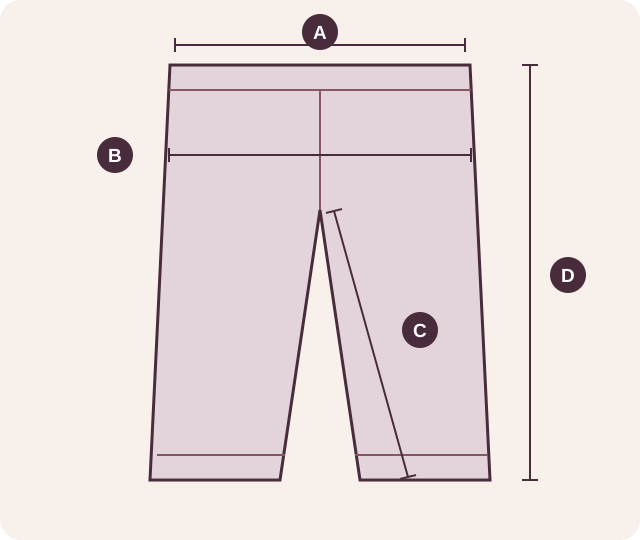
| Mark | Dimension | Question for seller |
|---|---|---|
| A | Flat waist width | Where should the tape sit? |
| B | Hip width | How far below the waist? |
| C | Inseam | From crotch seam to which edge? |
| D | Outer length | Is waistband included? |
Your checklist
- Check units
- Separate body and garment
- Read returns
Frequently asked questions
Is flat width a circumference?
No. It measures a flat dimension; check the seller’s convention before converting.
Can sizes be converted automatically between brands?
General conversions are approximate. Use the exact references and measurement conventions rather than a size number alone.
Sources & references
This method is an editorial suggestion to adapt to your taste, budget and everyday life. It is not based on product tests or brand rankings.