
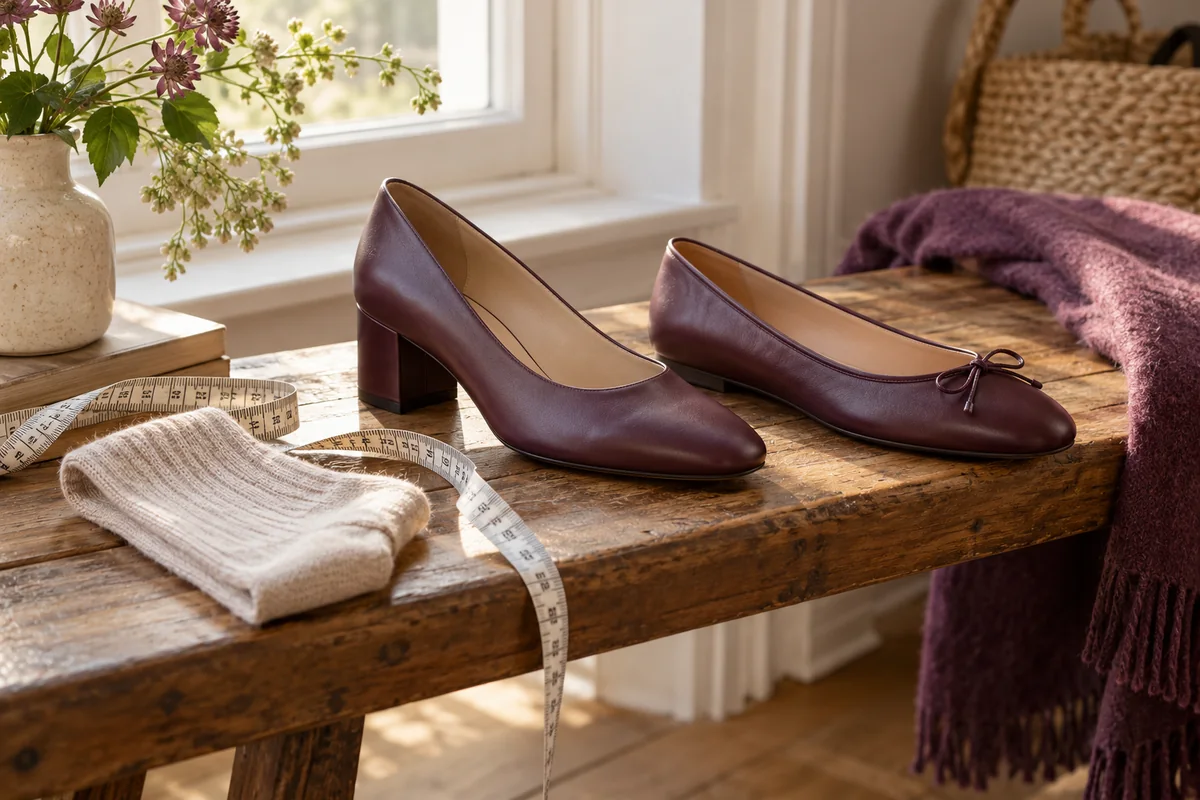
Describe the wearing context
Record travel, intended duration, socks and occasion. Separate visual preference from what can be observed in a trial. A stated size does not describe the entire shape.
Compare both shoes
Under permitted trial conditions, try both sides with intended socks. Observe closure, perceived stability and movement. Do not promise that discomfort will disappear after several uses.
Plan remote purchasing
Ask for the model’s size guide, measuring method and post-delivery trial conditions. Retain packaging and documents according to actual terms. A chart without a method leaves uncertainty to preserve.
Example: build a useful record
Fictional example: two models share a stated size, but guides use different measuring methods. Do not invent a comfort difference from figures. Ask each reference’s method and keep trial observations separate from chart comparison.
Record a moving trial
Fasten each model as you would wear it, then walk, turn and sit if the shop allows. Record heel hold, toe room and pressure from edges separately. If choosing between two pairs, repeat the same route with each. An identified pressure point is a reason to keep trying alternatives rather than rely on future softening.
Read the three parts of the EU label
In the EU, the label distinguishes the upper, the lining and sock, and the outer sole. “Leather” does not therefore necessarily describe the whole shoe. Identify the relevant part before comparing two models and ask for each model’s care instructions. Material information complements a fitting; it does not measure comfort.
Understand the label’s 80% threshold
For footwear covered by EU Directive 94/11/EC, the threshold uses surface area for the upper and for the lining and sock together. It uses volume for the outer sole. Where no material reaches 80% in a component, the label indicates the two main materials in that component.
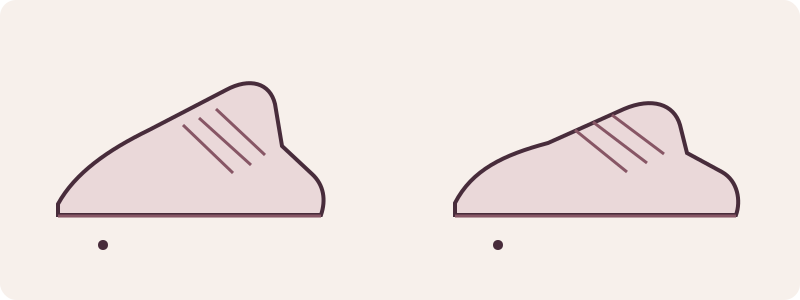
| Situation | Check | Next step |
|---|---|---|
| Shop | Both sides and socks | Observe movement |
| Remote purchase | Method and terms | Request information |
Your checklist
Frequently asked questions
Does size alone compare two models?
No. Also compare shape, reference and trial observations.