Check contact points
Observe shoulders, waist, seat and armholes as relevant. Look for pulling or uncomfortable folds. The label is a brand-specific reference; compare body and garment measurements when available.
Move realistically
Sit, walk, raise arms and wear intended shoes. Try jackets over a realistic layer. Standing comfort may not reflect daily movement.
Consider alterations
A simple hem differs from structural changes. Confirm feasibility and cost before purchase. When several areas are uncomfortable, another cut may work better than numerous alterations.
A practical example
Trousers look fine standing but pull at the waist when sitting. Try another cut and compare the same position before buying. Hemming will not correct this waist-comfort problem.
Define comparable measurements
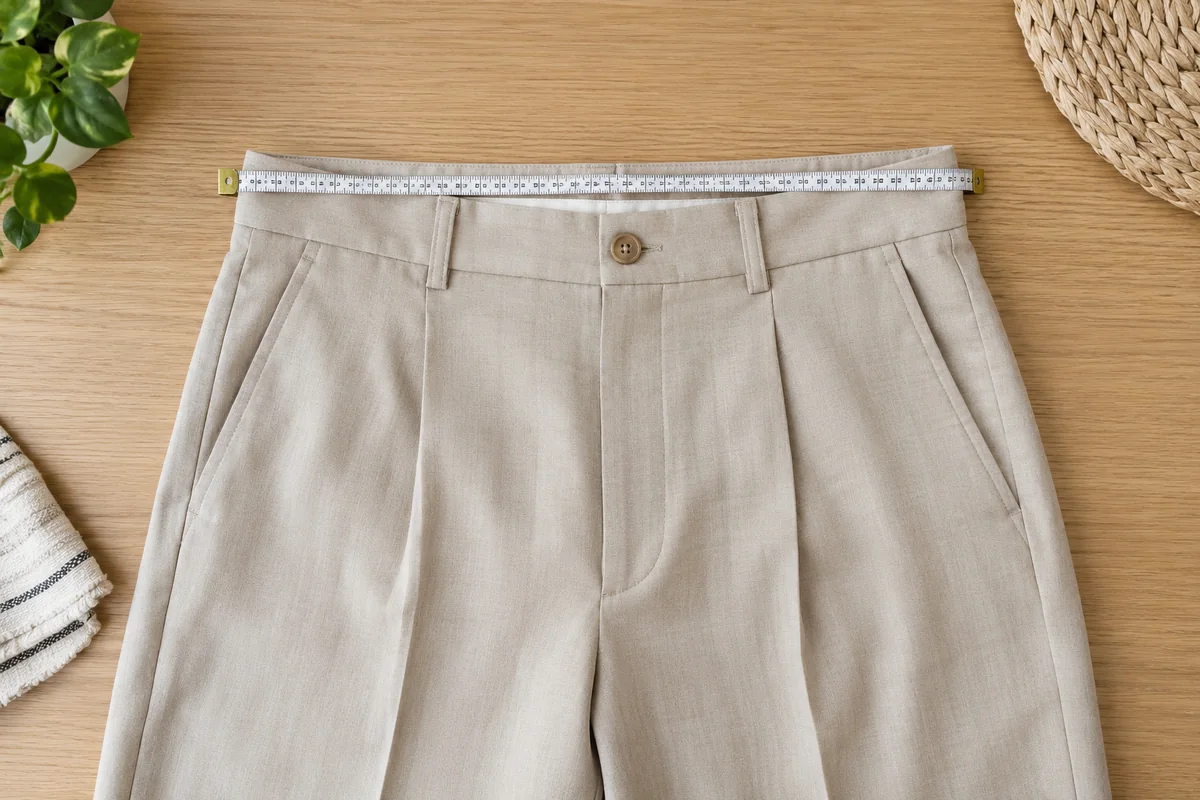
Distinguish body measurements from flat garment measurements. Ask where the seller measures. Compare with a similar piece and check stretch, lining and ease; one width does not describe fit.
Test usable pockets
If allowed, try a pocket with the item you plan to carry. Check closure, volume and effect on shape and movement. Decorative or narrow pockets differ from usable ones; assess separately from size.
| What to examine | Practical check | Useful decision |
|---|---|---|
| Sitting | Waist, hips and length | Note uncomfortable areas |
| Raised arms | Shoulders and armholes | Check with the planned layer |
| Walking | Hem and footwear | Assess the whole garment |
Your checklist
- Test movement
- Try realistic layers
- Price alterations first
Frequently asked questions
Does correct size guarantee fit?
No. Models with the same size can have different proportions; worn comfort matters.
Compare charts without their method?
No. Measurement points and included ease can differ.
Sources & references
This method is an editorial suggestion to adapt to your taste, budget and everyday life. It is not based on product tests or brand rankings.