Identify the item
Record garment type, readable brand, stated size and labelled composition. Photograph the label. Mark unavailable information as missing; appearance alone cannot establish fibre or authenticity. Separate observed condition from history you actually know.
Show overall views and details
Take front, back and interior in clear light. Add fastenings, seams and wear areas. Photograph flaws close up and from a distance to locate them. Avoid filters that change colour and explain that screens can also affect perception.
Explain measurement
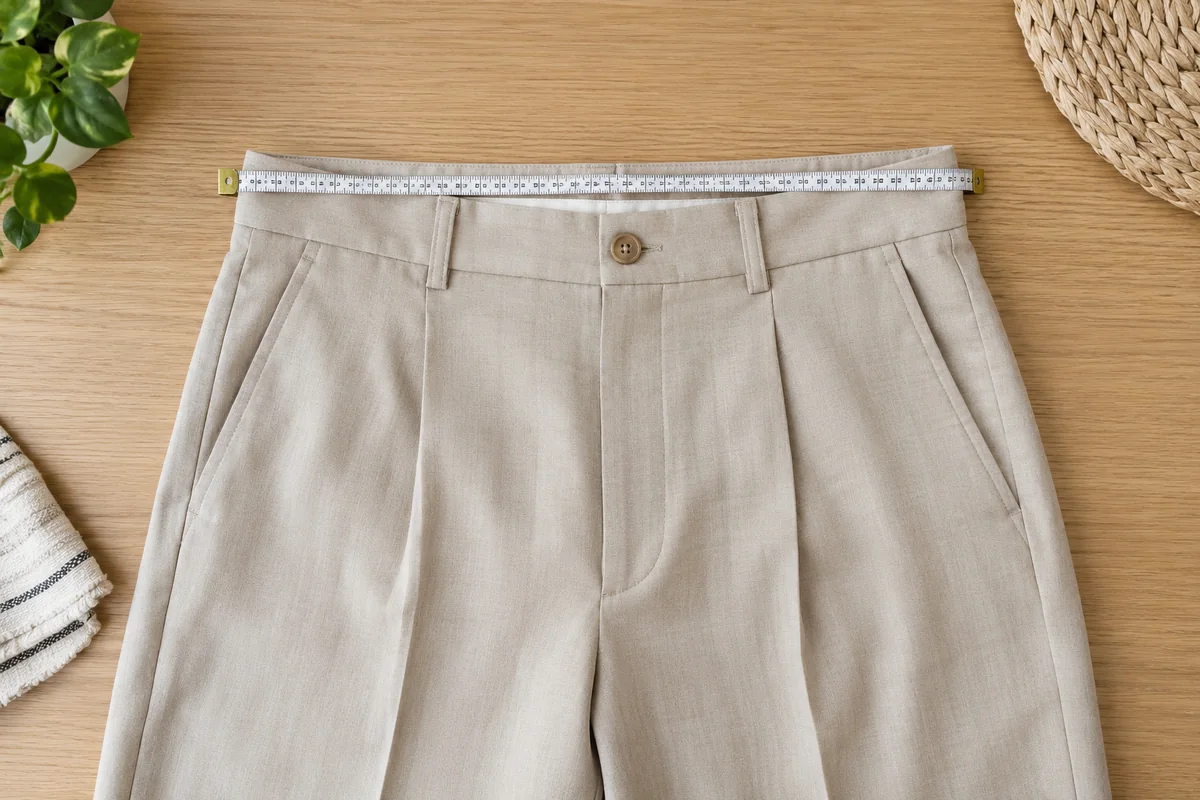
Lay the garment flat without stretching. Describe endpoints, units and whether waistbands or hems are included. A flat width is not a body circumference. For stretch fabric, do not present a stretched measurement as its normal dimension.
Review before posting
Check that text, photos and measurements describe the same item. Mention known alterations, repairs and missing elements. Transaction conditions should match the platform. Keep a copy of the listing to support exchanges without inventing new condition or certification.
Check included accessories
Before dispatch, check pictured included accessories: belt, removable hood or spare buttons. Clearly disclose anything shown in older photos but excluded from sale. Match the advertised set to the prepared parcel.
Your checklist
- Photograph flaws
- Describe measurement points
- Mark unknowns
Frequently asked questions
Can I use the manufacturer’s photo?
Prefer your own photos of the item. A commercial image does not document current condition and may be protected.
Hide a small flaw for a nicer listing?
No. Clearly locating it helps the buyer decide.
Sources & references
This method is an editorial suggestion to adapt to your taste, budget and everyday life. It is not based on product tests or brand rankings.