Start with the situation
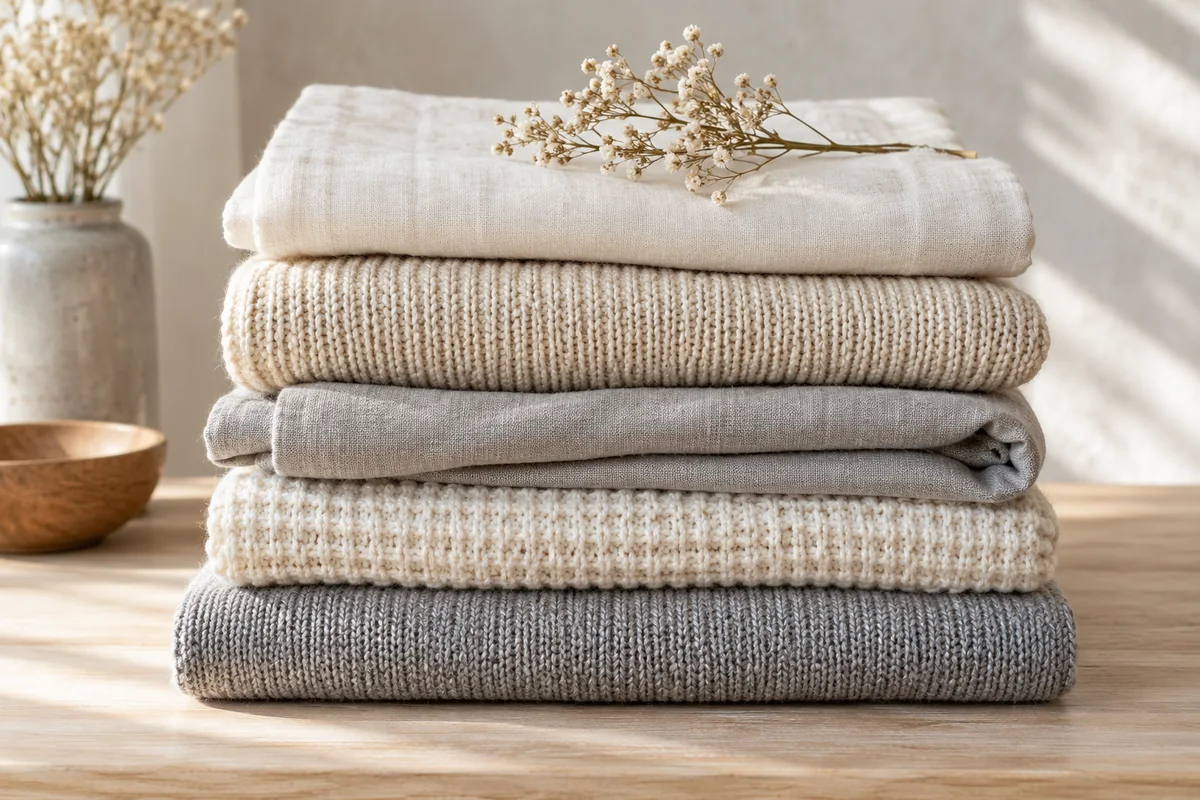
A garment may blend fibres for a particular result. Composition lists declared names and proportions; it measures neither comfort, strength nor total impact. First identify the use: shirt, knit, lining or stretch garment.
Read useful information
In the EU fibre names follow Regulation 1007/2011. Distinguish components when outer fabric and lining are listed separately. Illustrative example: 95% cotton and 5% elastane describes composition, but cannot calculate garment stretch.
Compare without shortcuts
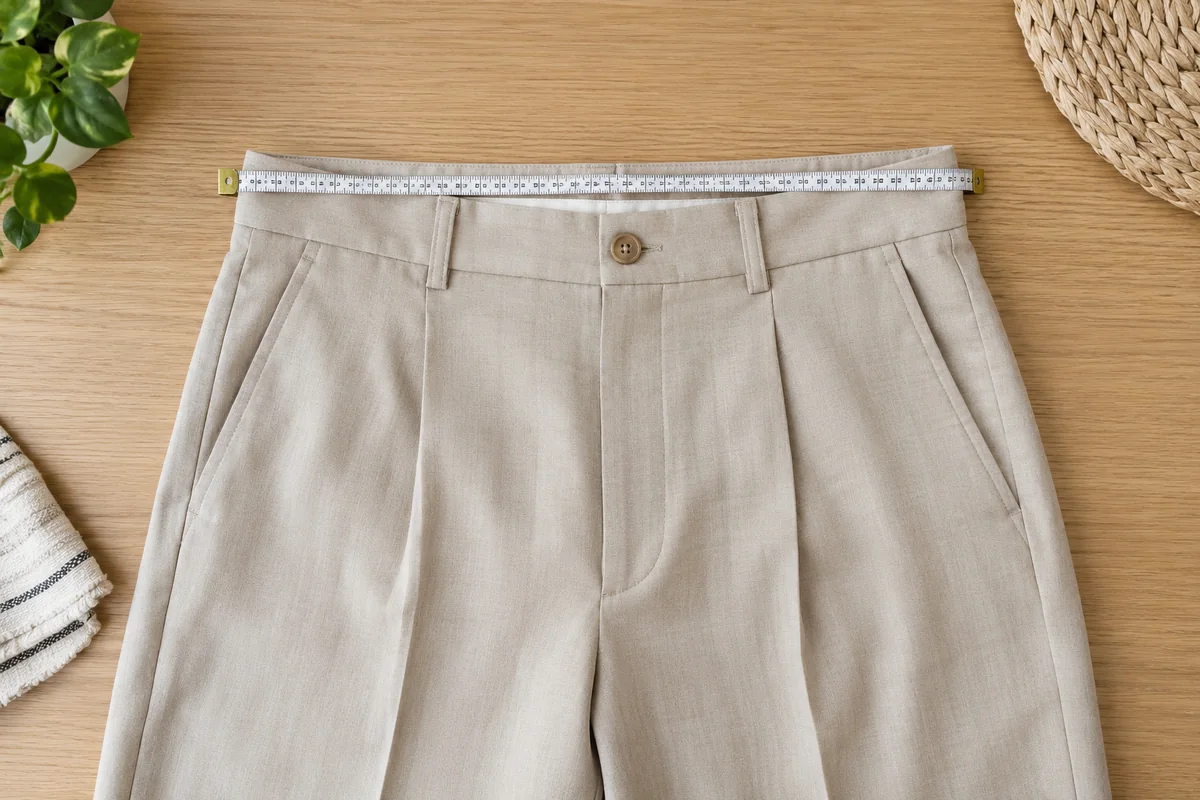
Compare garments for the same use through thickness, construction, transparency, seams and ease. More natural fibre alone cannot rank them. Fabric construction and cut also matter.
Organise the step
Keep photos of composition and care instructions. Check whether washing, drying and ironing fit your routine. For missing labels, request the exact product information rather than selecting care from the dominant fibre.
Your checklist
- Identify each component
- Record declared proportions
- Check garment and care
Frequently asked questions
Is a blend always lower quality?
No. Percentages alone cannot assess construction, comfort or durability. Inspect the garment.
Does the main fibre decide washing?
No. Follow complete-garment instructions including finishes, lining and accessories.
Sources & references
- Regulation (EU) No 1007/2011 · Annex I ↗EUR-Lex · European Union · Sources consulted on 2026-10-06
- Textile label ↗Your Europe · European Union · Sources consulted on 2026-10-06
- Textile care ↗GINETEX · Sources consulted on 2026-10-06