
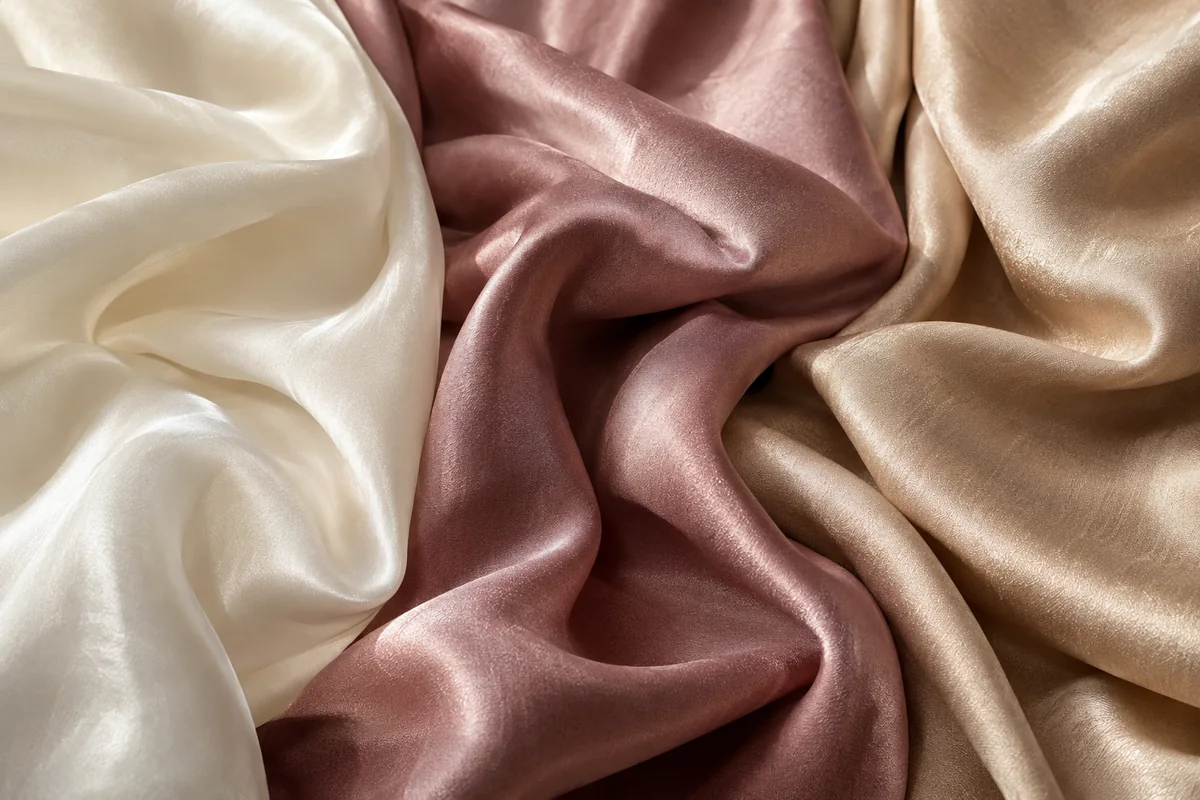
Reference name : Cupro · regenerated cellulose
Sources consulted on 2026-10-06 · Textile fibres · Manufactured cellulosic fibre
Role and characteristics
Cupro is regenerated cellulose obtained by the cuprammonium process in the European definition. It is neither silk nor a directly harvested plant fibre; its name does not certify cellulose origin.
How to choose
For lining, check ease, seams and tension during movement. For a whole garment, inspect transparency and drape too. Care belongs to the finished garment including its other components.
Distinguish from
Cupro and viscose are regenerated-cellulose fibres defined by different processes. The fibre name alone cannot establish manufacturing certification.
Limitations and considerations
A fibre name proves neither superior quality, geographical origin nor environmental certification. Seek product-specific evidence; blends, finishes and accessories also affect garment instructions.
| Reference point | Cupro | Viscose | Lyocell |
|---|---|---|---|
| Reference name | Cupro · regenerated cellulose | Viscose · regenerated cellulose | Lyocell · regenerated cellulose |
| Family | Manufactured cellulosic fibre | Regenerated cellulose | Regenerated cellulose |
| Distinction | Cupro and viscose are regenerated-cellulose fibres defined by different processes. The fibre name alone cannot establish manufacturing certification. | Viscose, modal and lyocell are regenerated-cellulose fibres with different process definitions. Bamboo alone cannot identify a processed fibre. | Lyocell is defined by cellulose dissolution and spinning without derivative formation. A commercial brand is not the legal name of every fibre it sells. |
| Regulatory reference · Annex I, no. | 21 | 25 | 33 |
Your checklist
- Photograph the garment’s composition and care labels.
- Record the stated blend percentages rather than a fibre name alone.
- Compare fit, feel and care on the complete garment.
Frequently asked questions
Can the fibre name select a washing programme?
No. Read instructions for the complete garment, including lining, finishes and accessories.
Sources & references
 Regulation (EU) No 1007/2011 · Textile fibre names and labelling EUR-Lex · European Union
 Textile care GINETEX
Reference names are sourced; selection advice is editorial. An ingredient function establishes neither tolerance nor formula effectiveness. A fibre alone does not determine garment quality.