Define the result
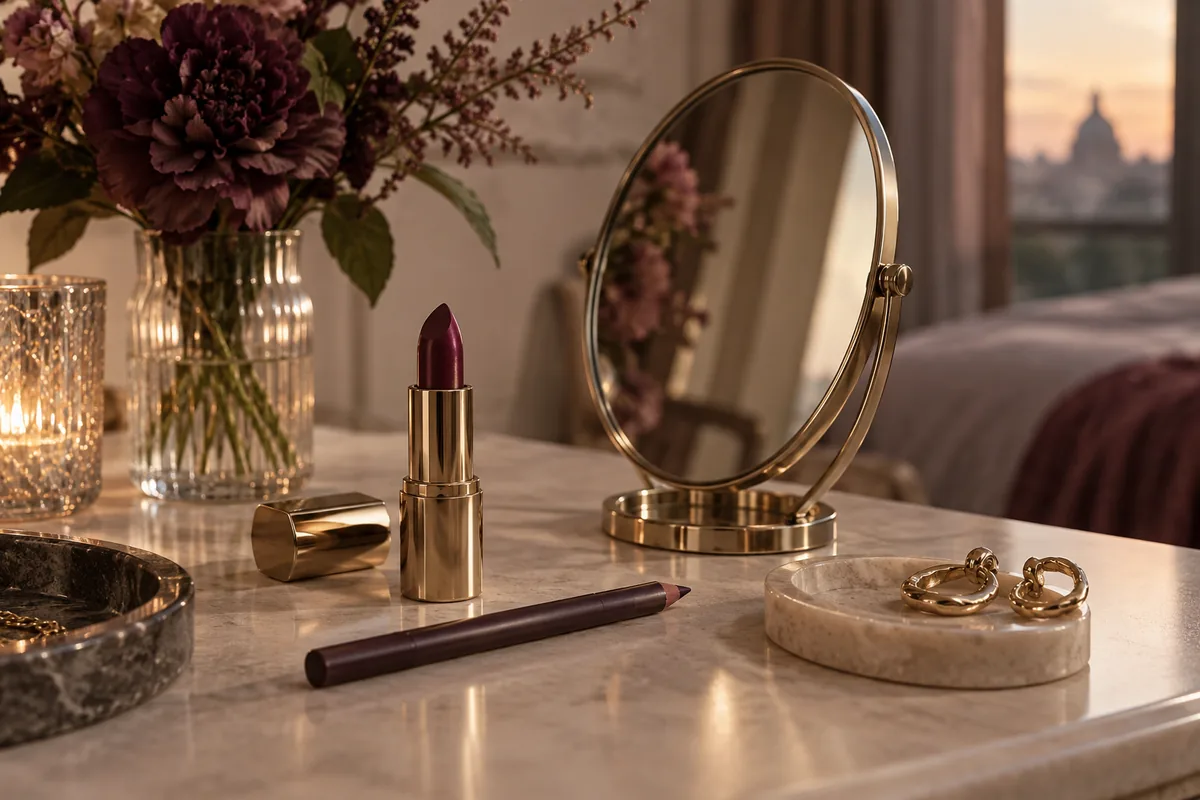
Choose local correction, defined eyes or coloured lips. One product per purpose often works initially. Foundation is optional when targeted concealer suits you; makeup can stay minimal.
Choose useful tools
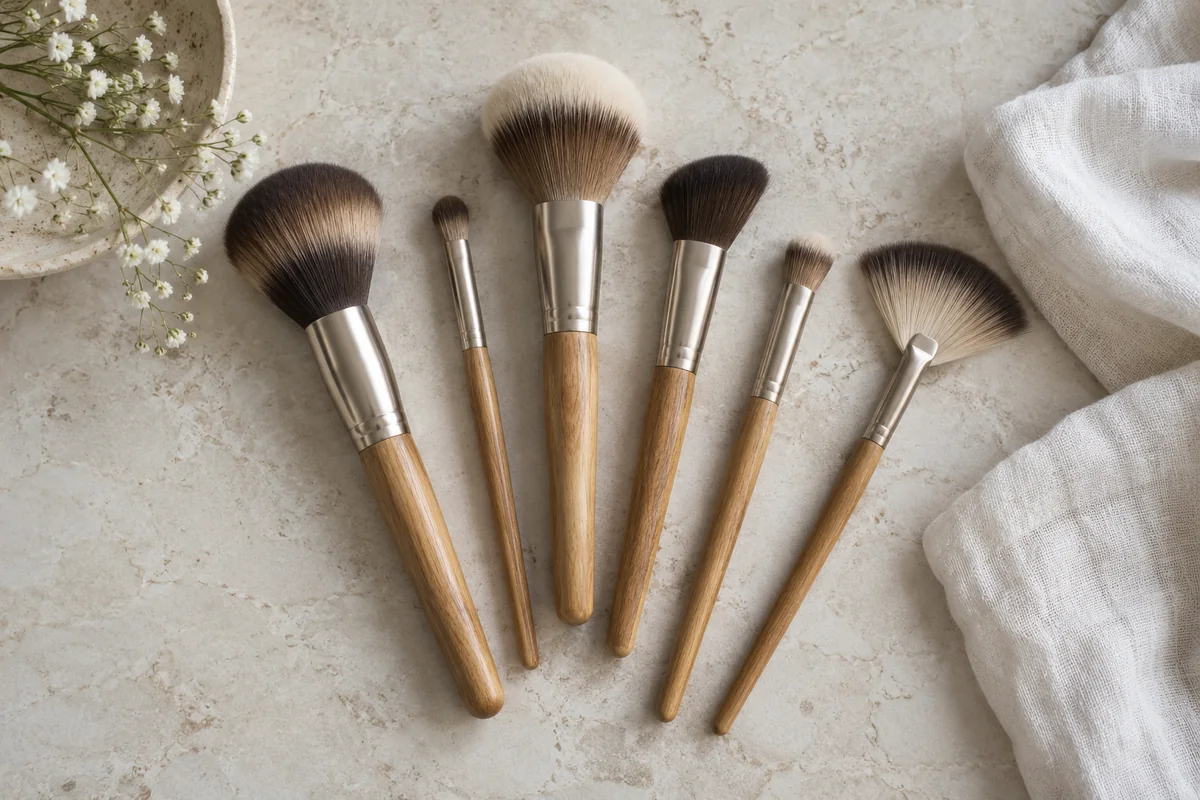
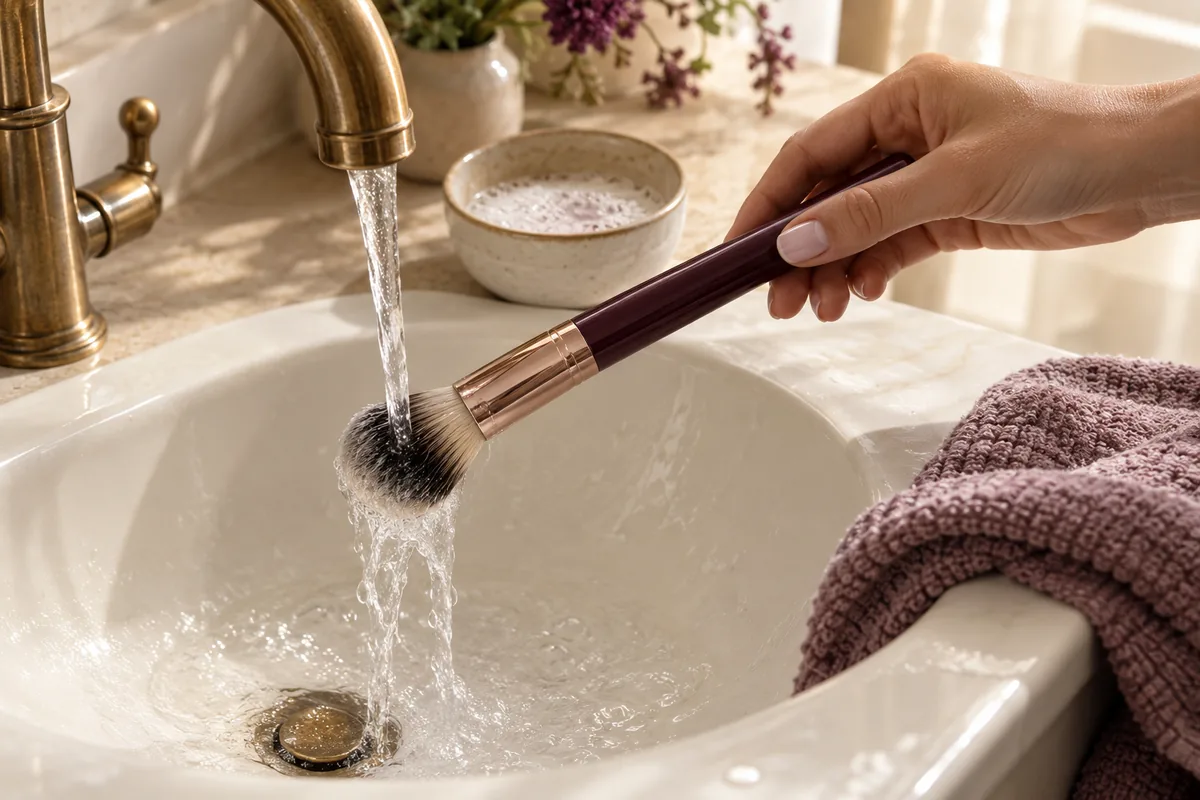
Try clean fingers, a brush or sponge according to formula and preference. Do not share eye products and use clean applicators. Only use products intended for the eye area near the eyes.
Build a daily kit
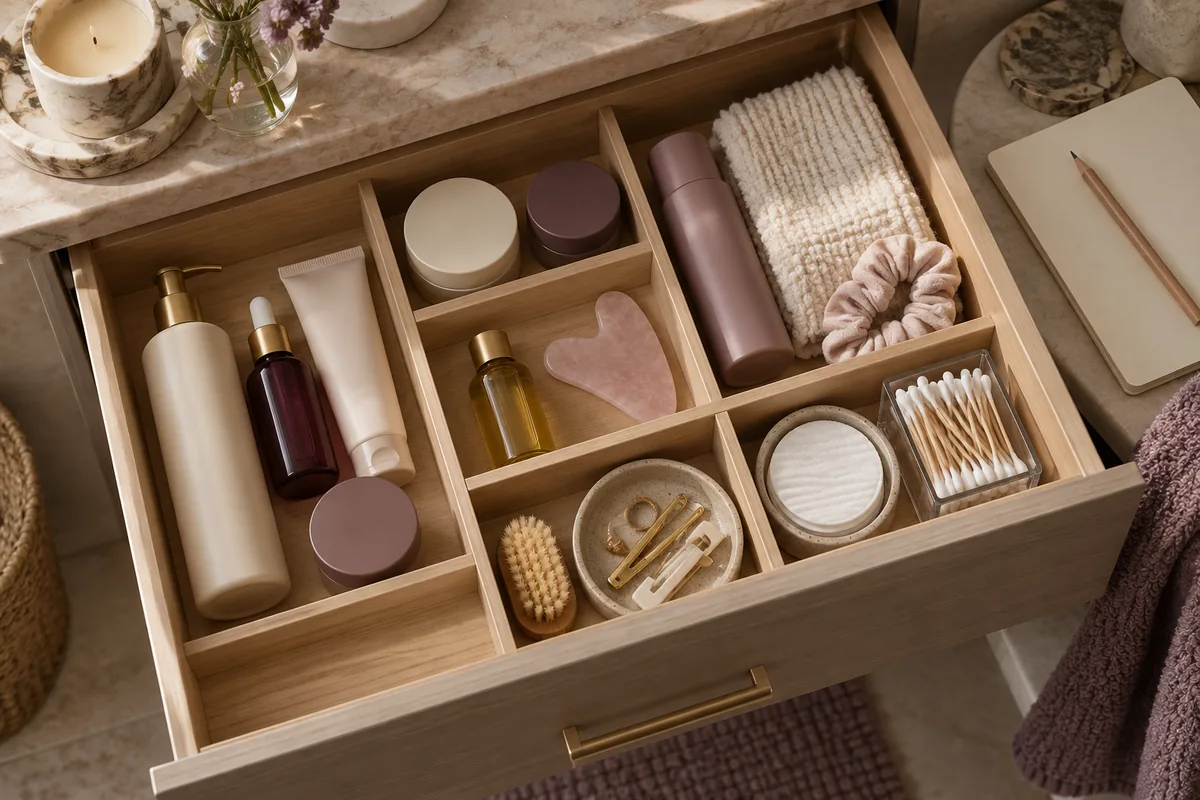
Group products used during a week and separate occasional items. Keep instructions and record opening dates. This simplifies busy mornings and reveals real gaps without replacing every tool.
Plan removal too
Include removal suited to product instructions. Keep names, shades and opening dates. Before buying, identify whether the gap is a function, a colour or an awkward tool.
Plan a portable kit
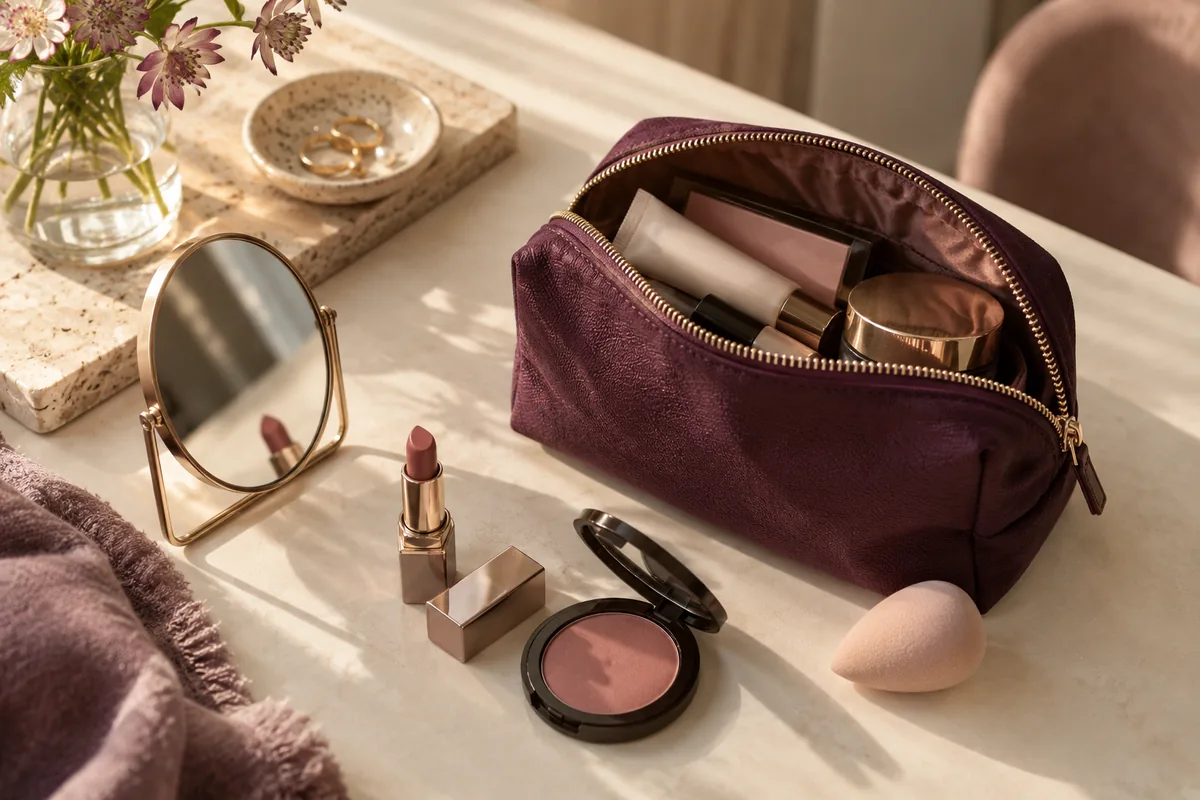
Assess home and portable kits separately: secure caps, mirror size, powder protection and clean-tool separation. Keep damp tools out. A compact kit that is difficult to clean may not be practical.
Test a real week
Build your makeup using the existing bag and identify products actually used, missing accessories and duplicates. Distinguish a colour preference from a functional gap: two favourite shades can both belong, but a third identical product will not fix an application difficulty.
Check the cost of a small size
A 3 g mini at €9 costs €300 per 100 g; a 10 g size at €20 costs €200 per 100 g. This arithmetic example is not a universal buying recommendation: if you use only 3 g, the initial spend remains €9 versus €20. Also compare the applicator, exact reference and conditions of use.
Weigh what actually serves the day
Fictional case: a complete kit weighs 600 g; the selection used during one day weighs 250 g. Before choosing the latter, check that it also covers removal and the day’s needs. Removing two items that serve the same purpose may help; losing an essential item merely to meet a target weight does not. Base the choice on actions actually performed rather than automatically buying more travel sizes.
Keep mascara personal
Wash your hands before applying eye makeup and keep your mascara for your own use. The FDA advises discarding dried-out mascara. Replace it instead of adding water or saliva.
| What to examine | Practical check | Useful decision |
|---|---|---|
| Even out | Area you want to change | Local correction or base by preference |
| Add colour | Worn shade and permitted area | One product matching the task |
| Apply and remove | Clean tools and instructions | Plan removal as well as application |
Put it into practice
An editorial planning method to adapt to your situation.
| Situation | Observe or ask | Next step |
|---|---|---|
| Overfilled kit | Repeated functions and products actually worn | Separate everyday and occasional use before buying |
| Touch-up away from home | Available mirror, closure and clean tool | Prepare a kit that is easy to store and clean |
Your checklist
Frequently asked questions
Do I need a complete kit?
No. Building gradually reveals preferences and avoids duplicate purchases.
Can a multipurpose product replace everything?
Only for areas allowed by its instructions; similar colour does not permit eye use.
Sources & references

Beauty directory
Brands, online shops and beauty magazines: explore their official websites and areas of focus.