
Separate uses
Keep tools personal and applicators clean. Avoid direct eye or lip contact with shared testers. Identify tools used with wet products to plan cleaning according to instructions.
Clean carefully
Follow guidance for cleanser, rinsing and drying. Do not routinely soak brush fittings. Rinse thoroughly and dry completely in an airy place; a closed makeup bag is not a drying space.
Check condition
Replace a sponge that tears, keeps an odour or cannot be cleaned. Check brush hairs, fittings and cleanliness. A quick spray does not replace manufacturer-recommended cleaning.
Plan drying space
Keep a clean spare while tools dry. Separate face, eye and lip tools. Check instructions before disinfectant use: cleaning and disinfecting are different operations.
Compare tools in a set
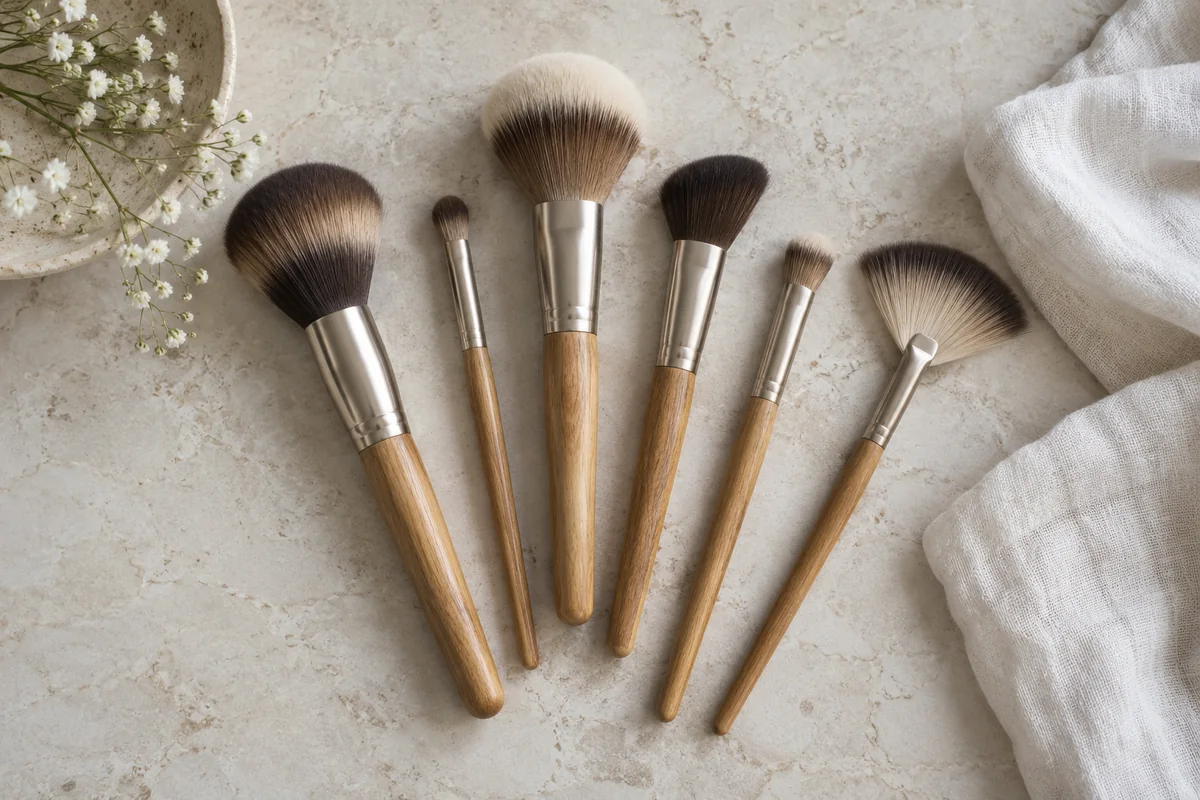
Similar shape does not mean identical tools. Record head size, apparent density and handling flexibility. Keep reference and actual function of favourites. Judge set price by tools you will use, not the advertised count.
| What to examine | Practical check | Useful decision |
|---|---|---|
| Wide area | Surface and preferred motion | Head suited to the area |
| Local work | Precision and access | Easy-to-control tool |
| Travel | Protection and drying | Case for a clean dry tool |
Your checklist
- Read tool instructions
- Dry before storage
- Do not share applicators
Frequently asked questions
Is there a universal replacement date?
No. Consider condition, use and instructions, without keeping damaged or uncleanable tools.
Store a damp sponge in a bag?
Wait for full drying according to instructions in an airy place.
Sources & references
- Eye Cosmetic Safety ↗U.S. Food and Drug Administration · Sources consulted on 2026-10-06
- How to clean your makeup brushes ↗American Academy of Dermatology · Sources consulted on 2026-10-06