
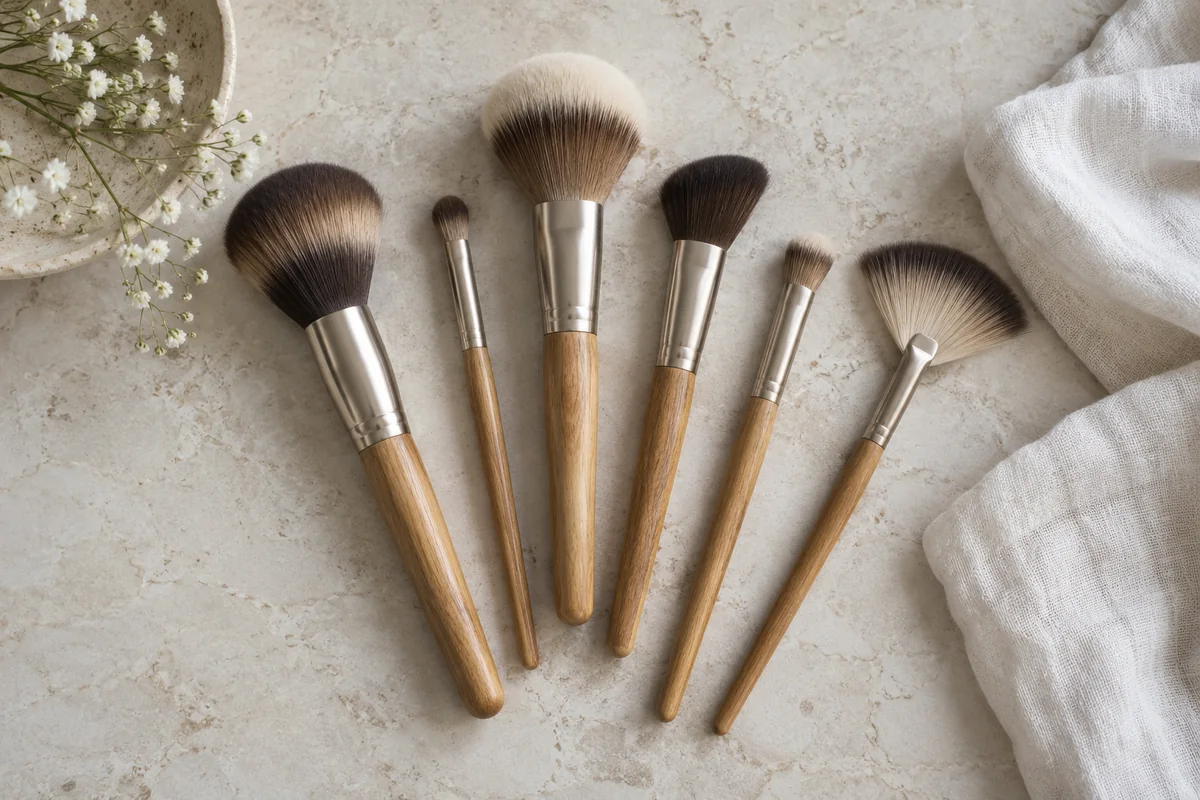
Identify the tool
Separate brushes used with powders, creams and liquids. Read the maker’s instructions for handles and adhesives. Prepare a clean towel and a place where brush heads can dry without touching a dirty surface. A crowded bathroom makes this harder.
Wash without soaking the handle
The AAD recommends washing brushes every seven to ten days. Rinse tips in lukewarm water and use a suitable gentle shampoo. Keep the handle joint out of the water. Rinse until residue is removed without pulling the bristles.
Allow drying time
Gently remove excess water and dry flat with tips beyond the towel edge. Drying depends on the tool and surroundings; a universal number of hours cannot guarantee it. Prepare another clean applicator if you need makeup sooner.
Store and inspect
Separate dry tools from those awaiting cleaning. A closed pouch is not a drying space. Check loose heads, split handles and shedding. Do not share brushes. These steps organise everyday care; consult the maker for special materials.
Prepare two alternating sets
Identify two small alternating tool sets rather than mixing clean, damp and used tools. Record cleaning dates without treating them as cleanliness guarantees. Observations and instructions still matter between sessions.
Your checklist
- Identify materials
- Plan drying before washing
- Store only dry tools
Frequently asked questions
Does a spray replace washing?
Check its intended use. Removing a colour mark does not demonstrate complete cleaning.
Do I need a large cleaning kit?
A clean space, suitable cleanser and towel may be enough. Extra accessories should meet a specific need.
Sources & references
- How to clean your makeup brushes ↗American Academy of Dermatology · Sources consulted on 2026-10-06