Identify a system intended for refilling
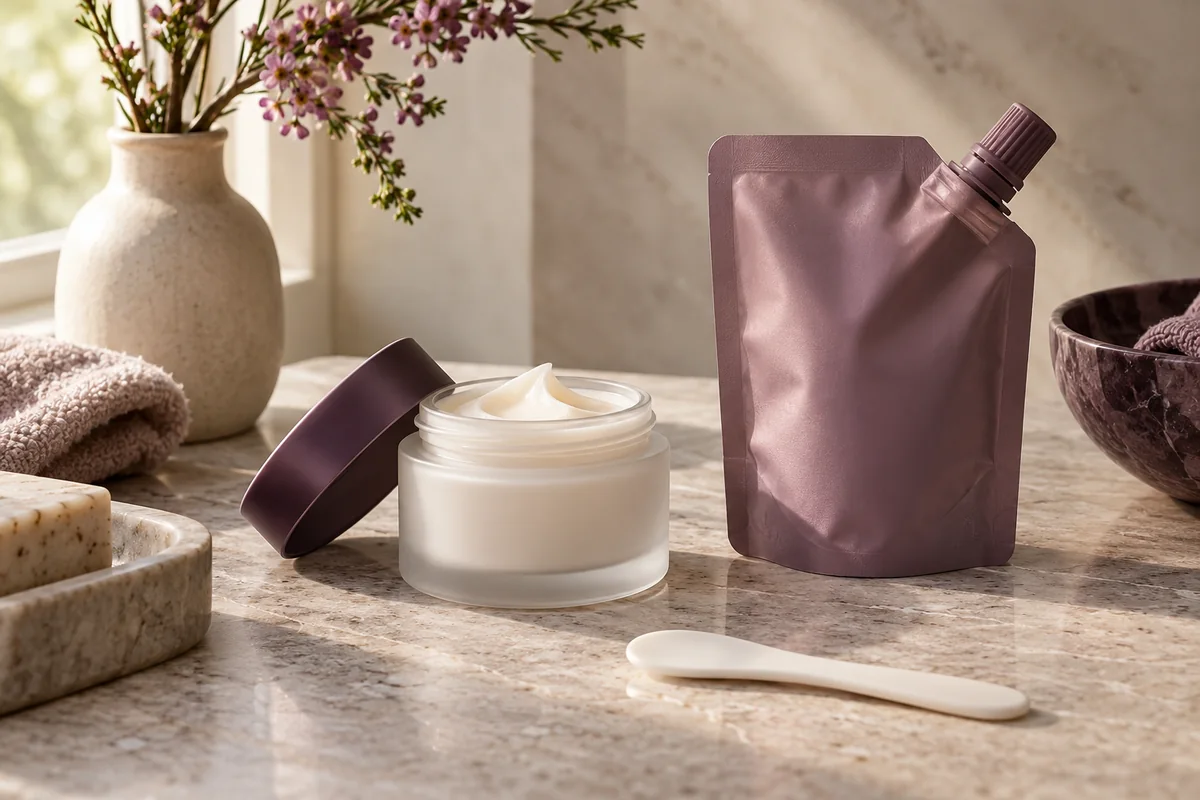
Record container and refill references. A pouch or large bottle is not automatically a compatible refill. Find explicit manufacturer correspondence, including opening, closure and any component replacement.
Read steps before emptying the container
Check preparation, cleaning if specified, filling and storage instructions. Do not add a different refill to remaining product without corresponding directions. Record where to find information after discarding packaging.
Compare useful cost at equal volume
Add price and attributable costs, then compare quantities. Fictional example: €32 for a 50 ml bottle and €24 for a 50 ml refill equal €64 and €48/100 ml. The difference is €8 if you already own the compatible container and no other costs change the total.
Examine environmental claims separately
Ask what is compared: packaging mass, transport or another indicator, and which complete system. A lower price does not establish lower impact. A refill you cannot use is not useful even if packaging claims material savings.
Worked example: prepare a decision
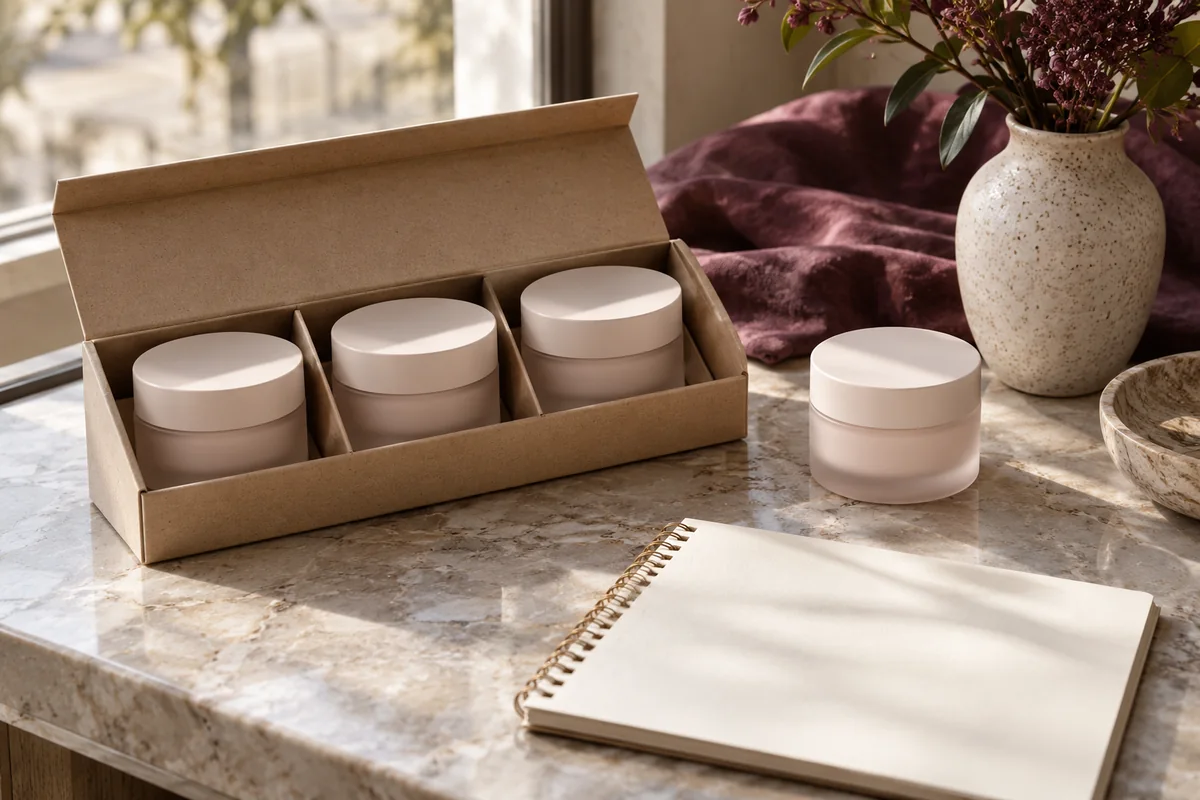
Fictional example: a skincare jar accepts refills, but two refill formats have similar names. Compare the jar reference, refill reference and the manufacturer’s compatibility information. Record price and quantity separately for each option, together with replacement instructions. Do not order a refill based only on the container’s appearance.
Include the first container in the comparison
If you need a dedicated container, compare two complete paths: a starter kit followed by refills, or successive complete products. At equal quantities, a €40 kit, €18 refill and €26 complete product cost €76 versus €78 for three fills in total. This fictional example excludes extra costs: the kit becomes cheaper at the third fill. This financial threshold does not measure environmental impact.
Compare several refills with the assumption visible
Fictional example at equal volume: an initial container at €18 followed by two €11 refills costs €40 for three fills. Three ordinary containers at €15 cost €45. The difference is €5 in this scenario; after just one fill, the refillable option instead costs €3 more. Include any specific extra costs and check that you really expect to buy those refills. This financial calculation does not demonstrate an environmental benefit, which depends on other data.
When does refilling cost less?
Editable fictional example. Compare prices for equal product quantities, including attributable costs. The starter kit includes the first fill.
Kit + (number − 1) × refill; other path: number × complete product.
Starting values are fictional and prices stay constant in this model. A negative difference means refilling costs more. The threshold does not predict your use or measure environmental impact. Inputs stay in this browser and are not saved.
Your checklist
Frequently asked questions
Is a large bottle necessarily a refill?
No. Check explicitly stated system and compatibility.
Does a better price establish lower impact?
No. Cost and environmental impact require different data.
Sources & references


Beauty directory
Brands, online shops and beauty magazines: explore their official websites and areas of focus.